
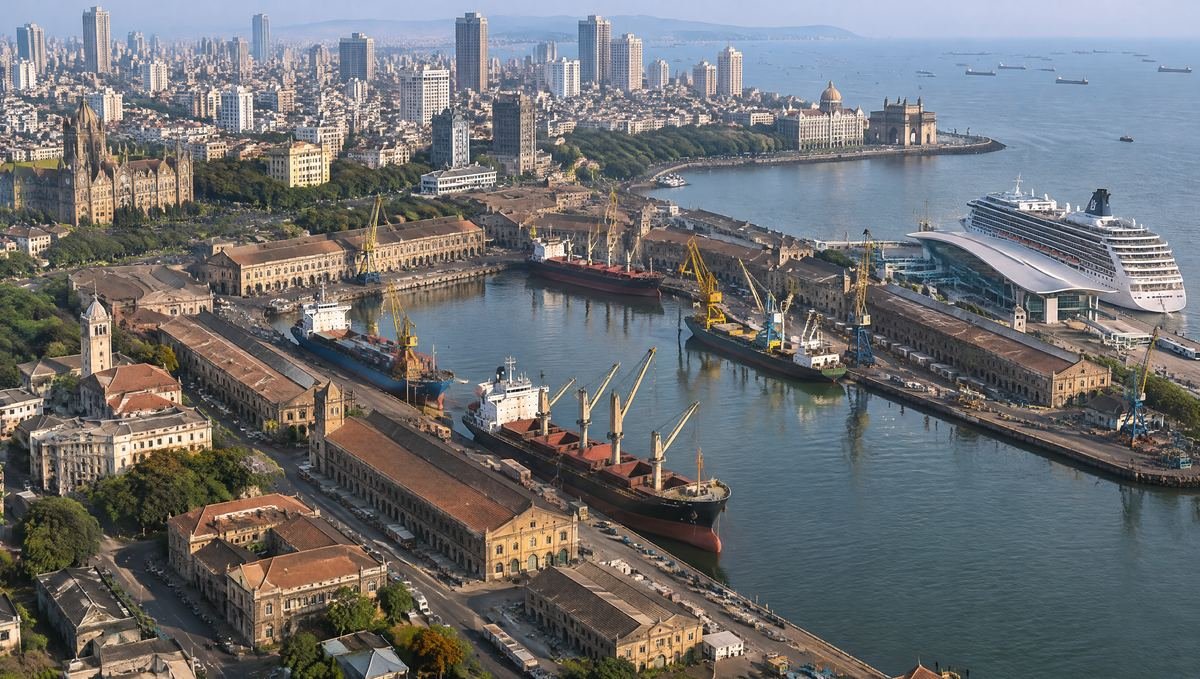
Mumbai Port
Mumbai Port, on the eastern waterfront of the island city, is India's oldest major port. Run by the Mumbai Port Authority, it built the city's fortunes as a trading hub, and today handles mostly liquid bulk, general and project cargo and cruise ships, while containers have largely moved across the harbour to JNPA.
History
The Bombay Port Trust was set up in 1873 to manage the city's growing docks. Enclosed wet docks — Prince's Dock, Victoria Dock and the larger Indira (formerly Alexandra) Dock — were built from the 1880s to the 1910s, letting ships work cargo whatever the tide. The trust became the Mumbai Port Authority under the Major Port Authorities Act of 2021.
What it handles
- Liquid bulk — crude oil and petroleum products at the Jawahar Dweep terminal on Butcher Island, and chemicals at Pir Pau, serving the refineries at Mahul.
- General and project cargo — steel, machinery and break-bulk at the enclosed docks.
- Cruise — a modern international cruise terminal at Ballard Pier for coastal, Gulf and Indian Ocean cruises.
- Ferries — Ro-Pax ferries from Ferry Wharf to Mandwa, and passenger boats from the Gateway of India.
Redevelopment
Large parts of the port's land on the Eastern Waterfront are being opened up for public use and new development, while the port concentrates on liquids, cruise and specialist cargo.
Location and access
The port lies along the harbour from Colaba to Wadala. The Atal Setu sea bridge and the Eastern Freeway link it to Navi Mumbai and the mainland.
Shipping through Mumbai Port
For containers, use JNPA across the harbour. Mumbai Port is relevant for liquid bulk, project cargo and break-bulk — ask us which suits your shipment.